Hello everyone, this article is about the common faults of hydraulic cylinders and the corresponding maintenance methods.
Fault phenomenon 1: The cylinder does not work
Fault reasons and solutions:
(1) Due to the blockage of the oil circuit, the pressure oil of the system does not enter the oil cylinder at all, and the oil circuit needs to be cleared at this time;
(2) Poor installation and connection may cause the movement direction to be affected by other external forces. At this time, the oil cylinder needs to be re-installed correctly.
Fault phenomenon 2: The hydraulic cylinder can move, but the movement speed is too slow
Fault reasons and solutions:
(1) It may be that the oil supply of the hydraulic pump is insufficient, causing the pressure to not rise. At this time, it is necessary to eliminate the fault of the hydraulic pump;
(2) It may be caused by excessive leakage of the system. At this time, it is necessary to check the sealing performance of each component and pipeline;
(3) The rod cavity and the rodless cavity of the oil cylinder are channeled, that is, a part of the pressure oil in the high pressure cavity leaks from the piston seal to the low pressure cavity, and the piston seal assembly needs to be replaced at this time;
(4) The cylinder or piston of the oil cylinder is excessively worn. At this time, it is necessary to consider whether to regrind it or replace it with a new one directly.
Fault phenomenon 3: hydraulic cylinder crawling
(1) Caused by air entering the hydraulic cylinder, exhaust treatment is required at this time;
(2) Foreign matter and moisture are mixed in the hydraulic cylinder, resulting in local strain and sintering. At this time, it is necessary to regrind the inner wall of the cylinder and find out the cause of foreign matter mixing;
(3) The hydraulic cylinder is poorly installed, causing the center line to be non-parallel with the guide rail of the guide sleeve. At this time, it needs to be re-installed;
(4) The moving seal is too tight, and the seal needs to be adjusted at this time;
(5) The piston and the piston rod are not on the same axis, and it needs to be corrected at this time;
(6) The guide sleeve and the cylinder are not on the same axis, and it is also corrected;
(7) The piston rod is bent, and the piston rod needs to be straightened at this time;
(8) The cylindricity of the inner diameter of the steel cylinder is not good. At this time, it is necessary to grind the cylinder and reconfigure the piston.
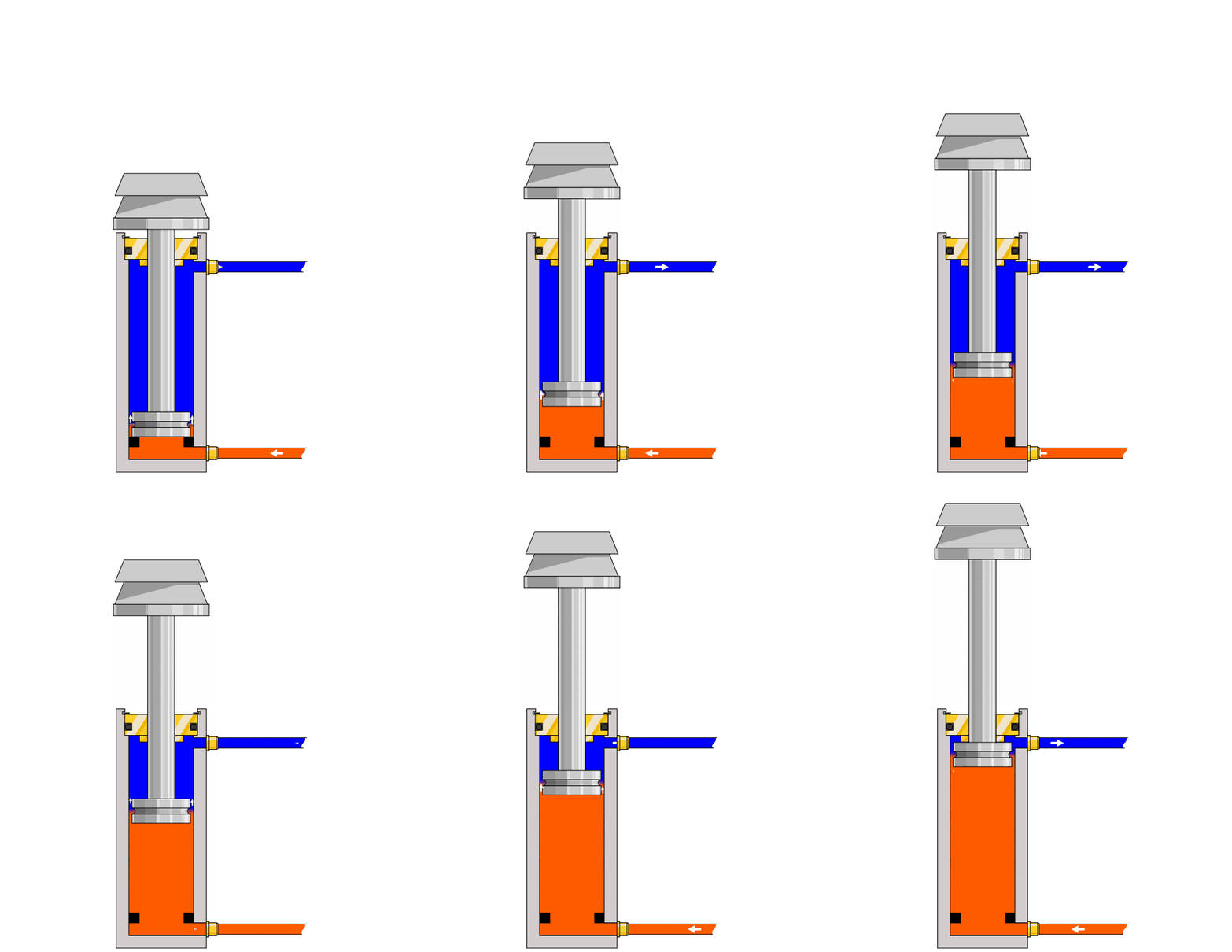
Fault phenomenon 4: jitter or even abnormal sound
(1) Air is mixed in the hydraulic cylinder, and the method is still exhaust;
(2) The sliding surface is too tight or the surface is rough, and the sliding surface needs to be ground at this time;
(3) If the piston seal is damaged, the oil in the high-pressure chamber will quickly leak back to the low-pressure chamber, and there will be a “squeak” sound. At this time, the piston seal needs to be replaced.
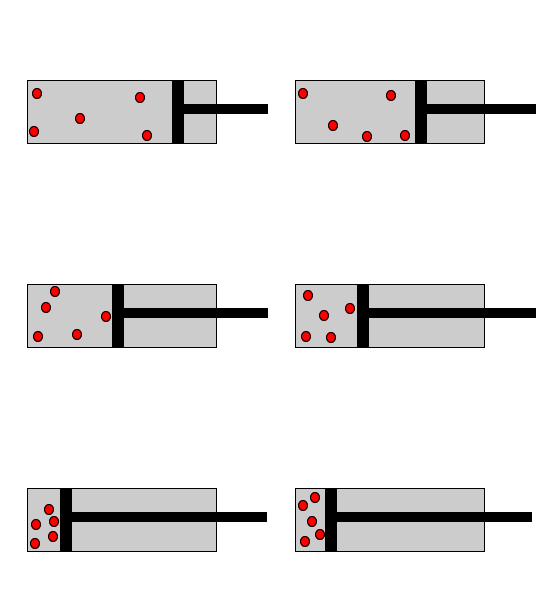
Fault phenomenon 5: end impact of hydraulic cylinder
(1) The buffer gap is too large and does not play a role in buffering. At this time, the buffer gap needs to be reduced;
(2) The one-way valve of the buffer device fails, and the one-way valve needs to be replaced at this time.

Fault phenomenon 6: hydraulic cylinder leakage
(1) The seal is damaged and needs to be replaced;
(2) The parts are deformed or damaged and need to be corrected or replaced directly.